

What is Hallmarking?
Hallmarking refers to the precise assessment and official certification of the purity level of precious metals (Gold and Silver) in manufactured items. These hallmarks serve as formal symbols of assurance regarding the metal’s fineness and are employed internationally to safeguard consumers and uphold quality standards. In India, both gold and silver are subject to hallmarking under regulated procedures.
The hallmarking initiative, administered by the Bureau of Indian Standards (BIS), complies with global standards. Jewellery retailers must obtain registration from BIS to participate in this scheme. Certified jewellers can then submit their products to BIS-recognized Assaying and Hallmarking Centres, accredited as per IS 15820:2009, for hallmarking.
In 2000, the Reserve Bank of India’s Standing Committee on Gold and Precious Metals designated BIS as the exclusive authority to implement hallmarking in India. This move aimed to prevent malpractice, enhance consumer protection, strengthen India’s jewellery export competitiveness, and position the country as a prominent global gold market. BIS operates the scheme across India through its network of regional and branch offices.
Objective of Hallmarking
The primary goals of hallmarking in India include:
- Protecting buyers from deceptive practices related to gold and silver purity.
- Promoting India as a significant player in the global jewellery market.
- Enhancing the country’s export capabilities through verified standards.
Offering third-party validation that assures buyers they are receiving accurate purity at fair pricing.
What are different Hallmarking standards?
The hallmarking process is governed by a set of Indian Standards:
| Standard Code | Description |
|---|---|
| IS 1417:2016 | Gold Jewellery/Artefacts – Purity and Marking Specifications |
| IS 2112:2014 | Silver Jewellery/Artefacts – Purity and Marking Specifications |
| IS 15820:2009 | General Requirements for Assaying and Hallmarking Centres |
| IS 1418:2009 | Fire Assay Method for Determining Gold Content |
| IS 2113:2014 | Assaying Methods for Silver |
| IS 17278:2019 | Specifications for Refined Gold and Silver Bars for Good Delivery |
Hallmark Unique Identification (HUID) number
Each hallmarked item features a Hallmark Unique Identification (HUID) number, a six-digit alphanumeric code that is distinct for every article. This identifier enhances traceability and can be verified by customers via the BIS Care App through the “Verify HUID” option.
Following its introduction on 1st July 2021, hallmarking now comprises three components:
- The BIS logo
- Purity rating in both carat and fineness
- The six-digit HUID code
All individual pieces, including detachable components, must carry separate hallmarks with unique HUIDs to ensure complete purity transparency.
Charges of Hallmarked articles:
The hallmarking process incurs specific charges:
Silver Articles
- ₹35 per article
- Minimum charge per consignment: ₹150 (additional taxes may apply)
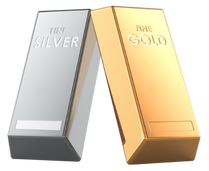
Gold Articles
- ₹45 per article
- Minimum charge per consignment: ₹200 (additional taxes may apply)
Permissible hallmark size (height) per metal type:
| Gold (mm) | Silver (mm) |
|---|---|
| 1.5 | 4.0 |
| 1.0 | 2.0 |
| 0.75 | 1.5 |
| 0.5 | 1.0 |
| _ | 0.75 |
Hallmark registration and grant
Jewellers intending to sell hallmarked items must apply to BIS for a certificate of registration under Section 14 of the BIS Act. The application must include:
- Duly filled Form-I and prescribed fees
- Proof of establishment
- Address verification
- Identity proof of the signatory
- A location map of the premises
- Annual turnover documentation

Upon submission, BIS verifies the application and may request further clarification or documentation. If approved, a certificate in Form-II is issued, valid for five years and applicable only to the premises listed therein. The outcome, including any rejection reasons, is communicated in writing to the applicant. Registration fees are non-refundable.
Benefits of hallmarking
For Jewellers
- Strengthened credibility : through certified quality.
- Regulatory compliance : reducing risk of penalties.
- Enhanced brand image : attracting quality-conscious clientele.
- Eligibility for public sector tenders : expanding market reach.
- Competitive edge : over non-certified competitors.


For Consumers
- Assurance of purity : backed by official certification.
- Legal safeguards : in case of non-compliance.
- Improved resale prospects : due to confirmed quality.
- Transparency : with verifiable data via the BIS Care App.
Wider Economic Impact
- Alignment with global norms : boosting exports.
- Market uniformity : ensuring consistent purity standards.

Need Assistance in Hallmarking Your Jewellery
Hallmarking refers to the precise assessment and official certification of the purity level of precious metals in manufactured items.
Presently, the hallmarking scheme in India includes two precious metals: gold and silver. These are subject to standards set by the Bureau of Indian Standards (BIS) to ensure purity and consumer protection.
No, the charges for hallmarking are applied per item, regardless of the article’s weight. This simplifies the cost structure and ensures uniformity in pricing.
Buyers should look for several key details:
- The BIS logo, along with a visible notice stating “Hallmarked jewellery available for sale”, should be displayed prominently outside certified retail outlets.
- The jeweller must exhibit the official registration certificate issued by BIS within the store premises.
- A magnifying lens of at least 10X should be available to help customers inspect hallmarking details.
- An informative chart showing the relationship between caratage and fineness should also be displayed for consumer reference.
The HUID is a distinctive six-character alphanumeric code assigned to each individual hallmarked item. It serves as a traceable identifier, allowing verification of the article’s authenticity and hallmarking details through the BIS Care mobile application, using the “Verify HUID” feature.
No, the facility to hallmark jewellery is restricted to jewellers who are formally registered with BIS. These authorized businesses are permitted to submit articles to certified centres for hallmarking.